Rebuilding Confidence through Dentistry: How All-on-4 Implants Are Changing the Conversation around Tooth Loss and Oral Health
5 min read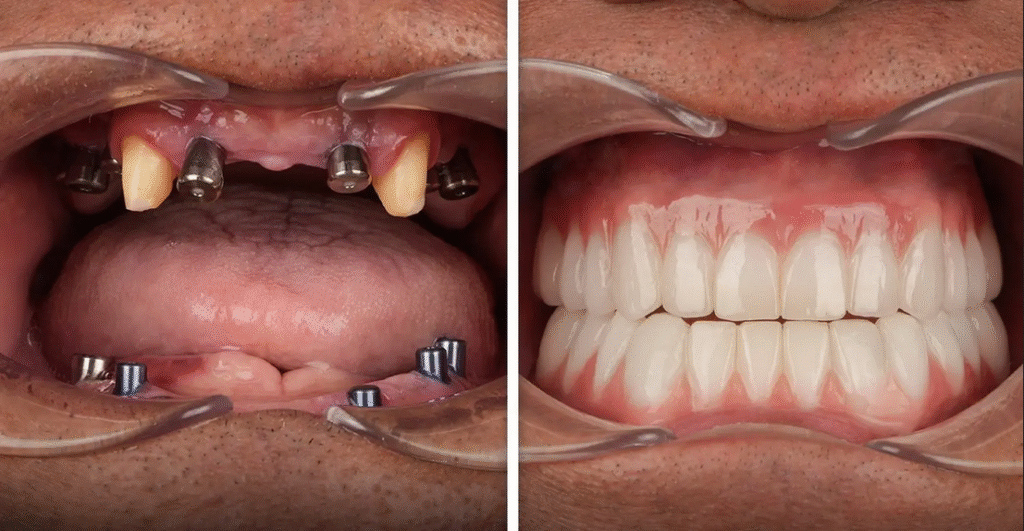
A smile can communicate things that words sometimes struggle to express. It can reflect happiness, welcome a conversation and create a sense of connection between people. Yet for individuals experiencing extensive tooth loss, smiling may become an uncomfortable reminder of something they would rather conceal. Missing teeth can affect far more than appearance, influencing speech, eating habits, facial support and the confidence to participate freely in everyday social situations.
Fortunately, modern restorative dentistry is changing the possibilities for people living with significant tooth loss. Among the developments attracting considerable attention is the All-on-4 dental implant technique, an approach designed to support a full arch of replacement teeth using four strategically positioned dental implants in suitable patients.
Beyond the technical achievement, this treatment represents a different way of approaching tooth replacement. It shifts the conversation away from simply filling empty spaces towards restoring function, supporting oral health and helping individuals rediscover the comfort of a natural-looking smile.
Understanding the Science Behind All-on-4 Implants
Traditional dental implant treatment often involves placing individual implants to replace separate missing teeth. However, patients who have lost most or all of their teeth may require a different restorative strategy.
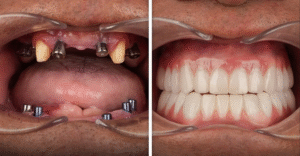
The All-on-4 technique uses four dental implants to support a full-arch fixed prosthesis. Typically, two implants are positioned towards the front of the jaw, while the posterior implants are angled to make use of available bone. This arrangement can help provide adequate support while, in selected cases, reducing the need for extensive bone grafting.
The technique is particularly valuable for patients with significant tooth loss or those whose remaining teeth have a poor long-term prognosis. Rather than replacing every missing tooth with an individual implant, the system distributes support across strategically selected positions.
An interesting aspect of this approach is how it combines biomechanics with biological healing. Dental implants rely on osseointegration, the process through which living bone forms a stable connection with the implant surface. This creates the foundation needed to support the replacement teeth.
Some suitable patients may receive a temporary fixed prosthesis relatively soon after surgery. However, immediate loading is not appropriate for everyone. Bone quality, implant stability, general health and individual clinical findings determine whether this approach is possible.
What Happens During the Recovery Process?
Understanding the recovery process after All-on-4 implant surgery is essential for anyone considering this treatment. Although the procedure is designed to provide a comprehensive tooth replacement solution, recovery requires patience and careful attention.
Immediately after surgery, patients can expect some swelling, tenderness and minor bleeding. These symptoms are generally part of the body’s natural response to surgical treatment. Their intensity and duration vary depending on individual circumstances.
During the early healing period, patients are usually advised to follow a soft-food diet. Foods that require excessive chewing or place unnecessary pressure on the implants should be avoided until the treating dentist confirms that normal eating can gradually resume.
Other important recovery considerations include:
– Follow prescribed medication instructions: Take pain relief or other prescribed medications according to the dental professional’s directions.
– Maintain careful oral hygiene: Follow specific cleaning instructions to keep the surgical area as clean as possible without disturbing healing tissues.
– Avoid smoking: Smoking can interfere with healing and increase the risk of implant complications.
– Attend follow-up appointments: Regular reviews allow the dental team to assess healing, monitor implant stability and identify potential concerns.
– Respect dietary restrictions: Avoid hard, crunchy and chewy foods during the recommended healing period.
Although some patients receive temporary fixed teeth shortly after surgery, these restorations are not necessarily the final prosthesis. The implants need time to integrate with the jawbone before the definitive restoration is fitted.
Recovery timelines differ, and patients should contact their dental team if they experience worsening pain, persistent bleeding, increasing swelling, fever or other unexpected symptoms.
More Than Replacing Teeth: Restoring Everyday Function
Tooth loss can gradually change the way people experience ordinary activities. Foods that were once easy to enjoy may become difficult to chew. Speech can feel unfamiliar, particularly when missing teeth affect pronunciation. Some individuals also experience discomfort or embarrassment associated with removable dentures.
A properly planned All-on-4 restoration aims to address several of these challenges.
By providing a fixed prosthesis, the treatment can offer greater stability than conventional removable dentures. Patients may find it easier to manage everyday activities such as speaking, eating and socialising once they have adapted to their new teeth.
The treatment can also help restore support for the lips and lower facial structures, depending on the extent of tooth loss and the design of the restoration.
These improvements can have a meaningful psychological dimension. When people no longer feel the need to hide their teeth during conversations or photographs, their relationship with social interactions may gradually change.
After all, a confident smile is often admired, but its true value extends beyond what other people see. Confidence can influence how comfortably someone communicates, expresses emotions and participates in experiences they once avoided.
The Importance of Long-Term Oral Health
One common misconception about dental implants is that artificial teeth require very little maintenance. In reality, the surrounding tissues remain vulnerable to inflammation and infection.
Even though an implant-supported prosthesis cannot develop conventional tooth decay, plaque can accumulate around the implants and contribute to peri-implant mucositis or peri-implantitis. The latter involves inflammation accompanied by progressive supporting bone loss.
This makes daily cleaning and professional maintenance essential.
Patients should follow their dentist’s recommendations for brushing, specialised interdental brushes and cleaning beneath the fixed prosthesis. Regular professional examinations help assess the condition of the implants, gums, supporting bone and prosthetic components.
The restoration itself may also require maintenance or eventual replacement because everyday chewing places repeated forces on its materials.
In other words, All-on-4 treatment is not the end of dental care. It is the beginning of a different maintenance journey.
Technology and the Future of Full-Arch Dentistry
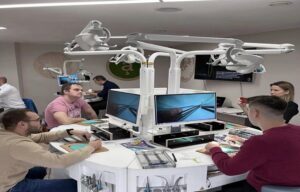
Digital dentistry is helping reshape how full-arch implant treatments are planned and delivered. Three-dimensional imaging, digital impressions and computer-assisted planning allow clinicians to examine jaw anatomy and assess implant positioning before surgery.
These technologies can help improve treatment planning, particularly when bone availability, anatomical structures and prosthetic requirements must be considered together.
The growing emphasis on digital workflows also encourages closer collaboration between implant dentists, prosthodontists, dental technicians and other specialists.
However, advanced equipment cannot replace clinical experience. Successful outcomes still depend on careful patient selection, appropriate surgical technique, sound prosthetic design and long-term maintenance.
A New Perspective on Life After Tooth Loss
Tooth loss can feel like the closing of a chapter, particularly when it affects someone’s ability to eat comfortably, speak naturally or smile without hesitation. Yet restorative dentistry demonstrates that losing natural teeth does not necessarily mean accepting permanent limitations.
All-on-4 implants offer an established treatment approach for suitable patients who need full-arch tooth replacement. By combining strategically positioned implants with a fixed prosthesis, the technique can help restore important aspects of oral function and provide a renewed sense of confidence.
Ultimately, rebuilding a smile is about more than recreating the appearance of natural teeth. It is about restoring everyday experiences, from enjoying a meal with family to speaking comfortably in a room full of people.
The most meaningful transformation happens when patients begin to think less about what they have lost and more about what they can comfortably enjoy again. With careful planning, realistic expectations and a lasting commitment to oral health, modern implant dentistry can help make that possibility a reality.